
05 May 2025
Technology is helping child abusers avoid detection in the Philippines
- New research finds child abuse in the Philippines is becoming more difficult to detect.
- There has been a shift towards covert groups operating in families, with victims getting younger.
- Abuse survivor calls for urgent action.
- Audio clips in notes to editors
Child abusers in the Philippines are evolving to become more difficult to detect warns a new investigation.
Technology is enabling large, organised crime syndicates to be replaced by smaller, covert groups often operating within families as the crime shifts online, facilitated by cryptocurrency and digital payment systems.
The research by Childlight Global Child Safety Institute, found victims are also getting younger with a rise in the number of cases of 5 to 12-year-olds being abused commercially, sometimes for as little as 20 pesos.
The institute, hosted by The University of Edinburgh and University of New South Wales, analysed 56 Supreme Court cases over 20 years identifying new trends in the crime.
Researchers found rather than perpetrators being attached to organised crime groups they’re now often found within families and social circles with nearly 60% of offenders’ women who were trusted caregivers.
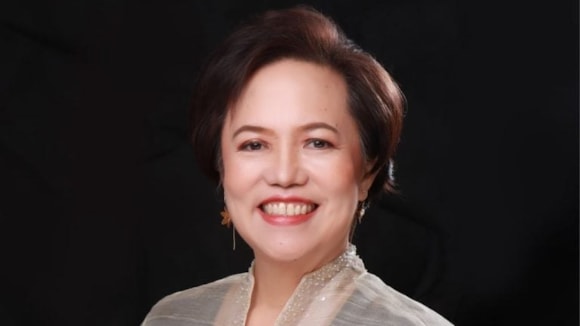
Childlight’s Bernie Madrid, who is a Clinical Associate Professor at the University of the Philippines Manilla, Child Protection Unit, said:
“Exploitation methods have evolved, becoming more difficult for authorities to detect and prevent. The locations of abuse have shifted from public venues to private homes and online platforms, where abuse can be livestreamed or recorded. Recruitment tactics have also evolved, with perpetrators using social media to coerce, manipulate and threaten victims.”
However, authorities in the Philippines are also adapting. To tackle this shift to online abuse landmark legislation has been introduced in the Philippines to ensure not just perpetrators but the technology companies enabling these crimes are held responsible. Introduced in 2022 the Anti-Online Sexual Abuse or Exploitation of Children (OSAEC) and Anti-Child Sexual Abuse or Exploitation Materials (CSAEM) Act is believed to be a first in the East-Asia and Pacific region.
While the number of cases coming to the courts is increasing because of better detection, more needs to be done to keep pace with this evolving crime.
Associate Professor Madrid said: “While law enforcement efforts have improved, the rise of technology-facilitated exploitation has made these crimes more complex. Enhanced legal measures, digital monitoring, and community awareness are crucial to protect vulnerable children.”
Childlight are calling for urgent measures to be taken in the Philippines, including:
- Community awareness programmes in urban hotspots like Manila, Cebu and Angeles City, on how to detect abuse.
- Establishing a unified helpline for victims
- Targeted training for lawyers and law enforcement
The report forms part of Childlight’s latest publication Searchlight which investigates who is benefitting from the multi-billion-dollar industry of child exploitation and abuse.
Childlight estimates more than 300 million children have been affected by technology-facilitated abuse globally, amounting to ten cases every second.
Briella*, a member of the Philippine Survivors Network who has experienced technology-facilitated child sexual abuse, called for urgent action.
The 21-year-old said: “I stand not only as a victim but as a voice of the thousands of children who suffer in silence. The results of this study uncover the stark reality: children, ages as young as five, are being exploited for as little as a soft drink cost. This is not simply a statistic — it’s a reflection of how little value is placed on a child’s dignity and life.
She added: “What makes this more tragic is the increasing role of family members as abusers. When the very people who are supposed to protect children from harm turn out to be the abusers, where can a child go? Most victims are caught in situations where it is not possible to speak out, and even when they do, justice often feels out of reach.”
She endorsed the report’s recommendations, including training and resources for law enforcement agencies to effectively investigate cases. She also called for action to tackle the underlying causes of exploitation, such as poverty and ignorance.
Briella added: “No child should ever have to be pushed into abuse simply because their family does not know any other way of survival. Sustainable livelihood initiatives for vulnerable groups can break this cycle and decrease the desperation that drives exploitation.
“As a survivor leader, I call on the government, private sector, and civil society to hear the survivors. Our stories are not painful memories; they are warnings and calls to action. We must build safe spaces for victims to recover, a platform for survivors to take their rightful leadership, and a society that refuses to turn a blind eye to these crimes. The time to act is now — because every child deserves a life free from exploitation."
Contact Information
Claire Stewart Williams
The University of Edinburgh
07866080953
claire.stewartwilliams@ed.ac.uk
Notes to editors
*Briella’s name has been changed to protect her identity.
Audio Clips of Associate Professor Bernadette Madrid - links to dropbox:
Research findings (27 seconds)
How concerning research findings are (19 seconds)
Philippine tech laws leading the way (1:04)
What needs to be done (45 seconds)
Read the research
Read the rest of Searchlight Searchlight - Childlight
Associate Professor Bernadette Madrid is the Executive Director of the Child Protection Network Foundation, Inc., an NGO that supports the training of child protection professionals and the development of women and children protection units in the Philippines. She also heads the Child Protection Unit (CPU) of the University of the Philippines Manila - Philippine General Hospital, where she is concurrently Associate Clinical Professor of Pediatrics. She is the founder and chair of the Child Abuse Neglect and Exploitation Study Group of the National Institutes of Health of the Philippines. Dr Madrid is a member of several government committees on health, social welfare, law enforcement and the judiciary She has been the recipient of several awards for her work in child protection. In 2022 she was awarded the Ramon Magsaysay Award, the most prestigious award in Asia.
Childlight is a global child safety data institute, hosted by the University of Edinburgh and University of New South Wales and established by Human Dignity Foundation. It utilises academic research expertise to better understand the nature and prevalence of child sexual exploitation and abuse to help inform policy responses to tackling it. Promoting a prevention-focused public health approach, its purpose is to safeguard children across the world from sexual exploitation and abuse. Its vision is to have child sexual exploitation and abuse (CSEA) recognised as a global health issue that can be prevented and treated. Its mission is to use the power of data to drive sustainable, co-ordinated action to safeguard children across the world; improve CSEA data, quality, integrity and reproducibility; and be recognised as the leading independent authority for global CSEA data. Childlight also draws on decades of law enforcement experience at a senior level. Its multi-disciplinary approach ensures not only the production of high-quality data insights but enables Childlight to help authorities around the world turn data into action to pinpoint and arrest perpetrators and safeguard children.


Powered by Onclusive PR Manager © 2026